

Voices of the Mission: Sam Brennan
Connecting the Dots in Counter-UAS Mission Assurance
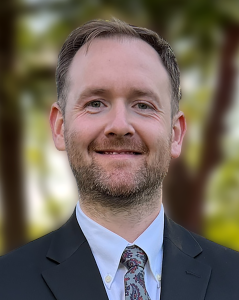
When threats evolve faster than traditional defense processes, you need people who can connect the dots between operational realities, technical capabilities and mission readiness. For Samuel Brennan, a CIS Secure program manager supporting Army counter-UAS mission assurance efforts, that challenge is exactly what makes the work meaningful.
A former Army intelligence analyst turned counter-UAS specialist, Brennan has spent the better part of the last decade helping test, validate and assess emerging counter-UAS technologies as part of the Army’s layered defense approach against evolving drone threats. His team’s mission is to help protect critical infrastructure, military installations and service members.
What began as a search for a better work-life balance after leaving active duty quickly became a career built around innovation, problem solving and a relentless curiosity about how technology works in the real world.
“I tell every new person who joins our team: this is the best job you’re ever going to have,” he says. “It’s never going to be this fun and this interesting again.”
A Career Inspired by Continuous Learning
Brennan’s story exemplifies what happens when a person’s brain meets the right challenge. In his youth, he barely scraped through technical school, graduating near the bottom of his class. Yet when he enlisted straight out of high school and took his ASVAB aptitude test for the Army, he scored high enough that they made him an all-source intelligence analyst. In that role, he learned how to synthesize information from multiple intelligence disciplines into actionable reporting and briefings for decision-makers.
After leaving the military, Brennan transitioned into full-motion video analysis supporting drone operations for BAE Systems in Northern Virginia. The work involved monitoring drone feeds, writing intelligence reports and working long shifts that often required exhausting commutes through DC-area traffic.
Seeking a new opportunity, he joined CIS Secure’s mission assurance team supporting Army counter-UAS operations. “At the time, I didn’t really know what mission assurance was,” he recalls. “But once I got into it, I became fascinated with the work almost immediately.”
Brennan’s fascination quickly evolved into expertise. And his growing expertise inspired him to use his GI bill to pursue a BS in Computer Networking and Cybersecurity at University of Maryland Global Campus. He made the Dean’s list several times before graduating in 2026.
Fully engaged in the scientific, strategic and technical aspects of counter-UAS operations, Brennan has embraced continuous learning as a core part of his career development. “I wasn’t ready for college back then,” he says. “The military gave me structure, discipline and direction. Now I enjoy learning.”
The technical knowledge gained through his studies has directly strengthened his understanding of networking, cybersecurity and the electromagnetic spectrum. That, coupled with his hands-on knowledge of multiple systems, their electromagnetic performance and troubleshooting underperforming fielded systems, makes Brennan a formidable force to have on any drone team.
Tackling a Mission as Broad as the Electromagnetic Spectrum
At CIS Secure, Brennan supports efforts focused on assessing the vulnerability of critical Army assets and installations against small unmanned aerial systems (sUAS) threats. The work spans everything from electromagnetic spectrum analysis and RF assessments to operational testing, airspace coordination, system validation and vulnerability assessments using the CARVER matrix (measuring criticality, accessibility, recoverability, vulnerability, effect and recognizability of a target.)
The mission itself has evolved dramatically over the years.
“When we first started, drones were just beginning to become a real concern in the United States,” he explains. “Now every service, every agency and even non-defense organization is having to think seriously about counter-UAS protection.”
The complexity of the mission means team members must understand not only the technology itself, but also the operational consequences if systems fail.
“We have to understand what these sites do, what missions they support and what would happen if those capabilities were disrupted,” he says. “That means learning everything from airspace coordination to threat scoring to electromagnetic performance.”
The work frequently places the team in highly sensitive operational environments across the United States and beyond. Some missions involve testing and validating systems around critical infrastructure or strategic installations, while others require rapid-response support for organizations experiencing active drone incursions.
The challenge is well suited for Brennan’s team. “A lot of our guys, even when they go home, still think about this stuff,” he says. “They still think about ways to address issues that we’re having, and they work on that kind of stuff in their own free time, just because they love it.”
Staying Ahead of Emerging Threats
As drone technology evolves, so do the challenges facing defense organizations.
According to Brennan, one of the biggest gaps customers face today is understanding the full electromagnetic environment in which their systems operate. Many organizations field advanced systems without fully understanding RF interference, spectrum conflicts or operational limitations that can reduce effectiveness.
“A lot of systems get fielded that technically work, but they don’t perform the way customers expect in real-world environments,” he explains. “There’s still a disconnect between operational deployment and understanding how these systems actually behave in the electromagnetic spectrum.”
His team frequently identifies underperforming systems, develops mitigation recommendations and helps organizations better understand how to optimize operational readiness before vulnerabilities become mission failures.
For Brennan, operational readiness is not simply about meeting current requirements.
“It’s about preparing for what’s next,” he says. “Mission readiness means understanding where technology and threats are heading before they arrive. It means staying ahead of what we’re trying to counter.”
In today’s threat landscape that may require a layered counter-UAS defense from across the electromagnetic spectrum, from high-energy lasers to high-powered microwaves. These technologies enable service members to disrupt and defeat unlawful or adversarial drone activity while minimizing risk to surrounding personnel and infrastructure.
The One Mission that Had the Greatest Impact
In all the years Brennan has served the defense community, one mission in particular stands out.
Following repeated drone incursions near Joint Base Langley-Eustis during the Christmas season, Brennan’s team was called in to support system validation and operational improvements. The work required rapid coordination, long hours and sacrifices during the holiday.
When the effort concluded, senior leadership publicly recognized the team’s contributions. The tribute was so warm and genuine that people got teary eyed.
“It’s usually a pretty thankless job,” he says. “But hearing leadership talk about the impact we had, especially knowing people gave up time with their families over the holidays, made it feel very real.”
With all the exciting challenges, prime deployments and cutting-edge opportunities Brennan has enjoyed in his career, the moment that stands out most is a simple acknowledgement of his team’s dedication and performance. That’s the sign of someone who truly loves making an impact with his skills.
Curiosity Helps Connect the Dots
Colleagues describe Brennan as someone who naturally connects the dots between mission and mission readiness. Whether he is helping standardize assessment processes, mentoring new personnel or sharing technical discoveries with teammates, his curiosity and problem-solving mindset consistently drive operational improvement.
That same curiosity extends beyond work. A self-described science and engineering enthusiast, he recently spent a year rebuilding a 2006 Mazda Miata with friends as a sort of tribute to his father who also loved to work on cars. They replaced the engine, suspension, steering components and clutch, ultimately bringing the red soft top convertible back to life.
For Brennan, the appeal is the same whether he is working on a vehicle, studying cybersecurity or supporting counter-UAS mission assurance. “I like understanding how things work,” he says. “And I like figuring out how to make them work better.” In today’s threat environment, that mindset may be one of the most valuable capabilities of all.
Brennan lives in Maryland with his fiancée who shares his technological bent. She recently graduated with a degree in Radiologic Technology.
