

Voices of the Mission: Tim Collins
From Operator to Developer: A Full-Stack Perspective on Secure Comms
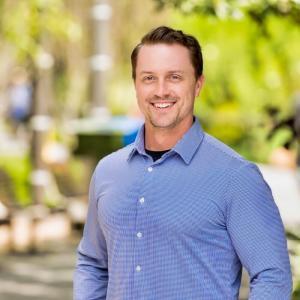
Tim Collins built his career at CIS Secure on closing the gap between the promise of secure communications and related capabilities and developing capabilities that actually perform in the field. He is uniquely suited for that role because he is a rare Senior Systems Engineer with deep experience as both a user supporting defense missions and a developer of advanced contested communications capabilities.
Collins’ path into the defense technology space wasn’t conventional. With a background in health and human performance and experience as a collegiate swimmer competing at the Olympic Trials level, he entered the Marine Corps without a technical foundation. But his physical capabilities gave him the strength and stamina to haul equipment long distances and through austere insertion methods, while his sharp intellect and natural ability to build trust across diverse teams earned him a coveted assignment within the signals intelligence and radio reconnaissance communities.
“It’s an environment that forces accountability,” he recalls. “You’re operating in a small, highly specialized team where performance—technical and physical—matters at all times.” This early exposure to both the technical and operational sides of defense technology became a powerful foundation for everything that was to follow.
A Career Built Across the Mission Lifecycle
After transitioning from active duty, Collins continued supporting signals intelligence and electronic warfare operations through defense contracting, primarily in Afghanistan. There, he worked directly with deployed units—installing systems, training personnel, advising key leaders, and supporting real-time mission requirements.
In one instance, he was tasked with rapidly deploying and operationalizing a communications capability at an exposed U.S. base during a period of significant instability and consolidation. Within 36 hours, the system was transported, installed, and tested, personnel trained and command leadership briefed. Shortly after, the capability would contribute to the early warning needed to thwart an imminent attack.
“That’s the kind of impact that stays with you,” he says. “You see directly how capability, properly deployed and understood, translates to force protection.”
Collins later spent time in the commercial sector as a solutions engineer, refining the ability to clearly articulate technical value and performance expectations to both executive leadership and end users—a skill he now considers essential in defense environments where misalignment can have operational, and potentially lethal, consequences.
Today, he works as a systems engineer focused on capability development, collaborating with warfighters, engineers and field support teams to rapidly deliver solutions that address urgent operational gaps.
“I have been the customer and received both excellent and horrendous support. I have been a field service representative with the intent of delivering the excellent service I relied on as a customer. And now I’m on the capability development side, which bridges the two roles. I have experienced secure communications capabilities from every angle and that gives me a unique ability to ensure future forces are as prepared and informed as they can be.”
The Biggest Challenge in Modern Contested Environments
Collins feels that one of the most significant challenges facing defense organizations today is the pace and scale of technological change.
“We’ve operated for decades with a relative technical advantage,” he explains. “That’s no longer the case. Instead of threats evolving maybe once or twice a year, now they’re evolving on a daily basis. The same is true for the systems to counter those threats, the knowledge necessary to operate in an everchanging environment, and the integration requirements to optimize the interaction between warfighters and their systems.”
The widespread availability of commercial off-the-shelf technology, artificial intelligence, and general information has lowered the barrier to entry for adversaries, enabling rapid innovation at lower cost and creating more near-peer rivals. At the same time, legacy acquisition approaches have resulted in systems that are often siloed and difficult to integrate.
“The result is operational friction,” he says. “Multiple systems, multiple interfaces and challenges moving data where it needs to go, especially in contested environments.”
He points to integration, not just capability, as one of the defining challenges moving forward, and is proud to be working at a company with a strong foundation in both.
Two Things Organizations Get Wrong on the Way to Readiness
Across the programs and environments Collins has observed, two issues consistently stand out in terms of communications readiness.
The first is that organizations underestimate their attack surface. What they see in terms of vulnerabilities is just the tip of the iceberg. “There’s usually a hidden 90% of risk floating beneath the surface than can harm you, your mission or your technological advantage,” Collins notes.
The second thing that can trip organizations up is the gap between technical specifications and real-world performance. “A system may meet every requirement on paper,” he says, “but once it’s deployed—affected by terrain, infrastructure and other systems—its performance can change significantly.”
Bridging that gap requires rigorous operational testing and evaluation—not just controlled engineering validation. “A good developer tests in the lab,” he explains. “A great one tests in the environment where the system will actually be used.”
Ultimately the goal is to be mission ready, which is a two-fold process. “It means being ready to operate with what you have, right now” he says. “But it also means preparing for how the threat will evolve tomorrow.”
Diving Deep Beyond the Mission
The same sensibilities that drive Collins’ career also extend to his personal life. An experienced diver, he participates in deep-water wreck exploration, using specialized equipment to investigate and identify historic shipwrecks off the U.S. East Coast.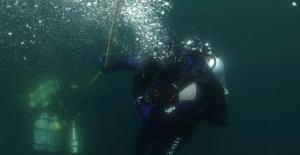
“I got into diving because it’s the same, mission-driven intersection of technology and human performance,” he says. “You’re solving problems in environments that are inherently complex and unforgiving.” He also builds his own drones and small-scale scale radar for fun.
Collins currently lives in Maryland with his wife and toddler son.
